
Quirky Query Hub playbook · 2 minute read
A round to try
Should teddy bears get their own seats at imaginary town meetings?
Children may debate with a partner or read a prepared sentence. Equal access matters more than rapid rebuttals.
Put it into practice
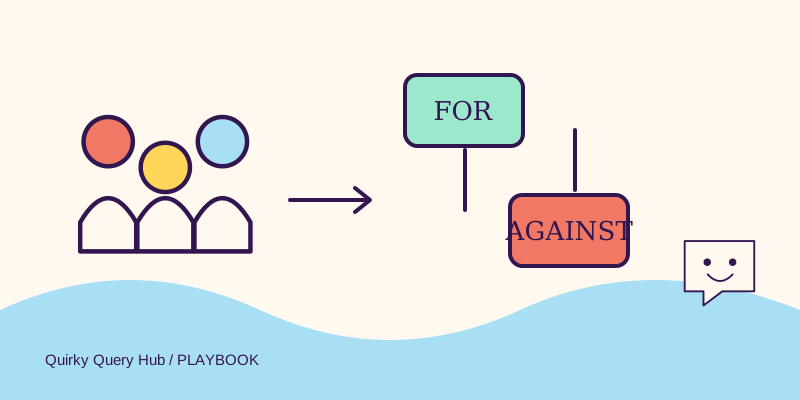
Family debates can use a pair of speakers per side. One offers the reason and the other supplies an example. This gives a quieter child a defined contribution without forcing a long solo speech or letting an adult take the whole turn.
Make room for a short and a long answer
Choose a proposition children can picture immediately: every playground should have an official cloud-naming desk. Before assigning sides, explain that a player can speak for one sentence or use the whole time. A longer speech does not automatically deserve more points. Younger players may ask a partner to read a prepared line, while adults should avoid packing their turns with references the rest of the family cannot follow.
For a practice exchange, one person argues that names help everyone remember a favorite cloud, and another worries that clouds keep changing shape before the labels are finished. Ask the group to notice that both points fit the pretend setting. Then start the scored round with equal time and one clear voting rule, such as best example. Let people pass or switch to an audience role without losing a personal privilege outside the game. If a younger player struggles to respond, offer a neutral prompt like what might happen on a busy day rather than supplying an entire argument. A useful finale lets the family design a sign for the cloud desk together. That shared drawing turns the competitive exchange back into collaboration and creates a role for someone who did not want to speak. Keep the result about the round, not about which family member is best at arguing.
A few good questions
Can a child debate with a partner?
Yes. One person can give the reason and another the example, with equal opportunities on the opposing side.